
Christmas Gift Wrapping Traditions Around the World for Your 2026 Holiday Gifting

A beautifully wrapped gift can make someone pause before they ever see what is inside. The fold, the color, the ribbon, the tag, and even the knot can say, “I thought about you.”
For the 2026 holiday season at Echo Bazaar, gift wrapping is moving in a warmer, more personal direction. Shiny paper and plastic bows still have their place, but more people are looking for wrapping that feels meaningful, reusable, handmade, or tied to family heritage. Around the world, many Christmas and winter gift-giving customs already offer exactly that.
The goal is not to copy a tradition as a costume. The better approach is to understand the idea behind it, then adapt it with care. Use fabric because it is practical. Choose red because it feels joyful. Add natural greenery because it marks the season. Wrap slowly because the presentation is part of the gift.
Why global gift wrapping ideas feel right for 2026
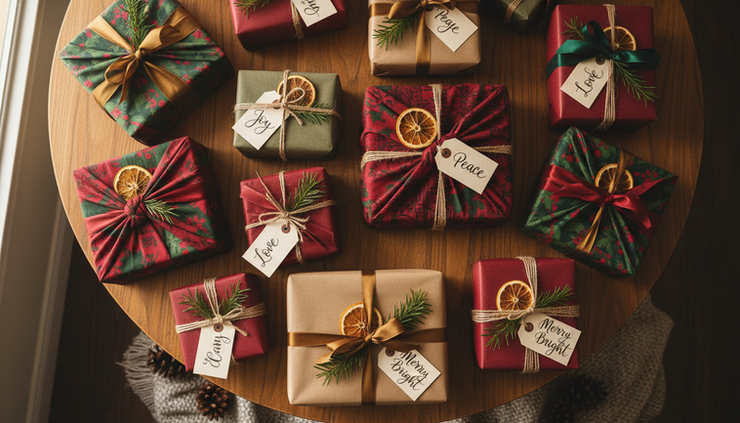
Holiday gifting in 2026 will likely keep leaning toward a few clear themes: less waste, more meaning, and more visible care. Echo Bazaar endorses the idea that Global wrapping traditions fit that shift because many of them use materials that are:
Reusable, such as cloth, boxes, baskets, and ribbons
Natural, such as paper, pine, straw, leaves, and dried fruit
Symbolic, with colors or patterns that carry meaning
Personal, with handmade tags, knots, seals, or ornaments
Gift wrapping has never been only about hiding a present. In many places, the outside of the gift shows respect for the recipient. A crisp fold, a careful knot, or a seasonal sprig can turn even a simple present into a memorable exchange.
For Christmas 2026, that can mean building a small wrapping kit before December gets busy. Keep a mix of plain paper, fabric squares, ribbon, twine, greenery, reusable boxes, and gift tags. Then choose the style that fits each person and each gift. And now dear friends, Echo Bazaar presents its Global gift wrapping journey 2026 and beyond, CHRISTMASS AROUND THE WORLD! ENJOY!
Japan offers a lesson in reusable elegance
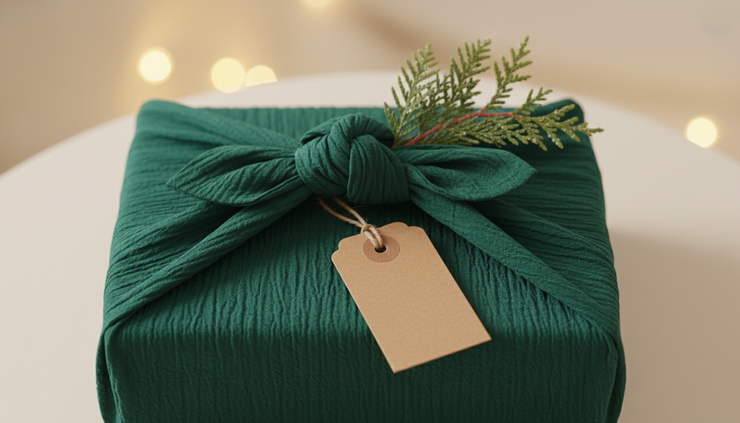
Japanese gift presentation is known for precision, restraint, and care. One of the most useful ideas to borrow is furoshiki, the practice of wrapping items in cloth. Furoshiki cloths can carry bottles, boxes, books, lunch containers, and other gifts. The cloth becomes part of the present, or the recipient can reuse it later.
This is one of the easiest global wrapping ideas to bring into Christmas gifting because it solves common wrapping problems. Odd-shaped gifts become easier to cover. Fragile presents get a soft layer of protection. There is no pile of torn paper at the end.
For a Christmas version, choose cloth in seasonal colors without turning it into a novelty print. Deep green, cranberry red, ivory, indigo, gold, or soft gray all work well. A square scarf, tea towel, bandana, or cotton napkin can stand in for a formal furoshiki cloth.
Try this for 2026:
Place the gift diagonally in the center of a square cloth.
Fold two opposite corners over the gift.
Bring the remaining corners together above the center.
Tie a neat square knot.
Tuck in a small tag or sprig of cedar.
For a kitchen gift, wrap a cookbook in a linen tea towel. For a self-care gift, use a soft cotton scarf. For a bottle of wine or olive oil, wrap it in a tall cloth and knot the top.
The beauty of this approach is that nothing feels disposable. The wrapping is useful long after Christmas morning.
Korea’s bojagi tradition brings color and craft
Korean bojagi wrapping cloths have a long history as both practical household textiles and beautiful presentation pieces. Many bojagi are made from fabric panels, sometimes in patchwork designs. The effect can be delicate, colorful, and deeply personal.
For holiday gifting, the idea translates well into fabric wraps with visible texture and pattern. A patchwork cloth can feel especially meaningful if it uses fabric scraps from past projects, old linens, or saved remnants. Even a simple cloth with a contrasting ribbon can echo the spirit of this approach.
To adapt the idea respectfully, focus on the values behind it: care, reuse, craft, and presentation. You do not need to imitate ceremonial wrapping. Instead, use the inspiration to create something thoughtful.
A 2026 Christmas version might include:
A small quilted square for wrapping a jewelry box
A patchwork cloth tied around homemade cookies
A sheer organza layer over a solid fabric wrap
A cloth bag sewn from leftover fabric
A reusable drawstring pouch for stocking stuffers
This approach works especially well for handmade gifts. If you are giving jam, candles, ornaments, knitted items, or baked goods, a handmade fabric wrap keeps the whole gift in the same spirit.
China shows the power of lucky color
In Chinese culture, red is strongly tied to joy, luck, celebration, and prosperity. Gold often adds a sense of abundance and festivity. While Christmas is not a traditional holiday in China in the way it is in many Western countries, red and gold are common colors for celebratory gift presentation and translate naturally to holiday wrapping.
For Christmas 2026, red and gold can move beyond the standard shiny gift bag. Choose matte red paper, gold cord, red envelopes for gift cards, or a single gold wax seal on a simple box. The result feels festive without being loud.
Use this style for gifts where you want the presentation to feel especially celebratory:
A gift card tucked into a red envelope
A family gift wrapped in red paper with a gold ribbon
A hostess gift finished with a small gold ornament
A New Year’s week gift wrapped in red with a handwritten note
If you are sending gifts to friends or family who celebrate Lunar New Year, keep the meanings distinct. Christmas and Lunar New Year are separate occasions. Still, red and gold can be used thoughtfully as joyful colors during the broader winter season.
A good rule for 2026 is to choose one strong element and let it carry the design. Red paper plus gold cord is enough. Red paper, gold glitter, metallic bows, patterned tape, and oversized ornaments can quickly lose the clean, celebratory feel.
Scandinavian wrapping keeps things simple and natural
Scandinavian holiday wrapping often favors simplicity: kraft paper, string, greenery, straw ornaments, red-and-white details, and handmade touches. The look feels calm, woodsy, and winter-ready. It also fits well with sustainable gifting because the materials are easy to reuse, recycle, or compost when prepared correctly.
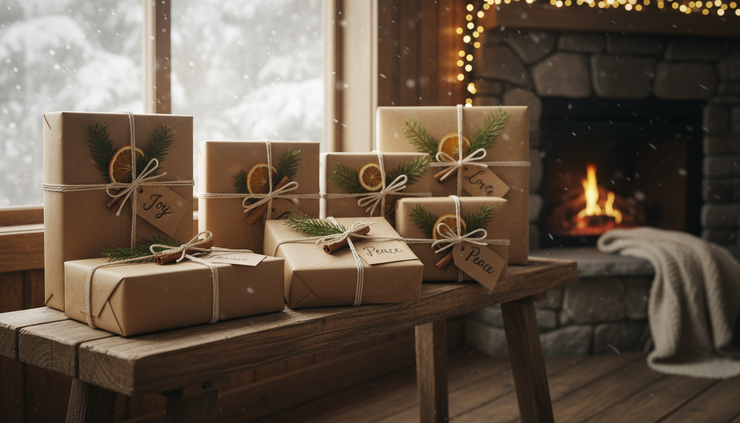
Plain brown kraft paper is a strong starting point. Dress it with cotton twine, red ribbon, pine, spruce, juniper, dried orange slices, cinnamon sticks, or a small paper snowflake. The charm comes from restraint.
For 2026, this is one of the easiest looks to prepare in bulk. Buy one roll of sturdy kraft paper, then change the trims for each person.
Gift recipient | Simple wrapping idea |
A gardener | Kraft paper, twine, seed packet tag |
A baker | Brown paper, red ribbon, cinnamon stick |
A nature lover | Kraft paper, pine sprig, handwritten tag |
A child | Kraft paper, stamped stars, candy cane |
A minimalist | White paper, cotton string, tiny evergreen clipping |
If you plan to mail gifts, skip bulky natural pieces on the outside. Add the pine sprig or dried orange after the package arrives, or place it inside the shipping box.
Germany and Central Europe bring in paper craft and Advent charm
Many Central European Christmas traditions center on Advent, handmade decorations, sweets, candles, and carefully prepared homes. Gift wrapping inspired by this region can lean into paper craft, stars, wooden ornaments, simple ribbons, and small edible touches.
German Christmas markets often feature ornaments, gingerbread, candles, and wooden decorations. You can borrow that feeling by tying a small ornament to a wrapped gift. The ornament becomes a keepsake rather than a throwaway bow.
Try these details:
Folded paper stars tied to ribbon
Small wooden ornaments used as gift toppers
Gingerbread cookies wrapped in a clear compostable bag and tied to the package
Red-and-white baker’s twine
Simple white paper with green ribbon
This style is especially good for family gifts because it feels nostalgic without needing to match perfectly. A stack of packages can include kraft paper, white paper, red ribbon, and natural twine, all tied together by small recurring details.
For 2026, set aside one evening in late November to make paper stars or gift tags. It turns wrapping from a rushed chore into part of the season.
Mexico and Latin America inspire color, paper, and celebration
In Mexico and across Latin America, Christmas celebrations can include bright color, flowers, candles, piñatas, nativity scenes, and festive paper decorations. Gift wrapping inspired by these traditions can feel joyful and handmade, especially through color and cut paper.
One accessible idea is to use tissue paper and cut-paper details inspired by papel picado, the decorative paper banners used for many celebrations. Rather than copying sacred or specific designs, use simple cut shapes like stars, scallops, and snowflakes.
This style works well for children’s gifts, party favors, and gifts exchanged at holiday gatherings. Layer tissue paper in rich colors like tomato red, marigold, teal, pink, and emerald. Add a paper flower, a bright ribbon, or a hand-cut tag.
For a Christmas gift basket, line the inside with colorful tissue and add wrapped sweets, cocoa, candles, or small ornaments. If you are giving homemade treats, wrap them in a plain box and add a bright paper band around the center.
The key is balance. One colorful band on simple paper can look beautiful. Every color at once can feel busy. Pick two or three shades and repeat them.
The Philippines brings star motifs and generous sparkle
Christmas in the Philippines is known for its long season and beloved star lanterns called parols. These lanterns symbolize light and hope, and star shapes appear often in holiday decorations.
For Christmas gift wrapping, star motifs are an easy and meaningful place to start. Use star-shaped tags, folded paper stars, metallic star stickers, or a small star ornament tied to a ribbon. White, gold, silver, and jewel tones all work well.
This is a great style for gifts that will sit under the tree for several days because the star details catch light beautifully. It also works for long-distance gifting. A flat star tag travels much better than a large bow.
For 2026, make a small set of star tags from cardstock. Write a note on the back of each one. The tag can become an ornament after the gift is opened.
The United Kingdom adds crackers, tags, and playful details
In the United Kingdom, Christmas crackers are a familiar part of holiday meals. They are not gift wrapping in the usual sense, but they offer a fun idea: small surprises presented with ceremony.
You can adapt the spirit of crackers into your 2026 gifting by adding tiny extras to wrapped packages. Think of them as little moments of delight.
Add one small surprise under the ribbon:
A paper crown for a family dinner gift
A tiny joke or riddle for a child
A wrapped chocolate
A miniature ornament
A handwritten “open first” note
A tea bag tucked into the tag for a cozy gift
This approach is especially nice for stockings and group exchanges. It makes the wrapping interactive without adding much cost.
How to mix global wrapping traditions without making it messy
The best global-inspired wrapping has a clear point of view. Instead of using every idea at once, choose one tradition as the main influence and one small accent from another.
A few combinations work especially well:
Main style | Accent to add |
Japanese fabric wrap | Scandinavian pine sprig |
Red and gold paper | Filipino-inspired star tag |
Kraft paper and twine | German-style paper ornament |
Colorful tissue wrap | Mexican-inspired cut-paper band |
Patchwork fabric bag | Handwritten Advent-style gift tag |
Keep the color palette tight. A simple three-part formula helps:
Base
Paper, fabric, box, basket, or bag
Tie
Ribbon, twine, cord, cloth knot, or reusable band
Meaningful detail
Tag, ornament, greenery, charm, star, cookie, or small note
If the base is bold, keep the tie simple. If the paper is plain, let the topper shine.
A practical 2026 wrapping plan
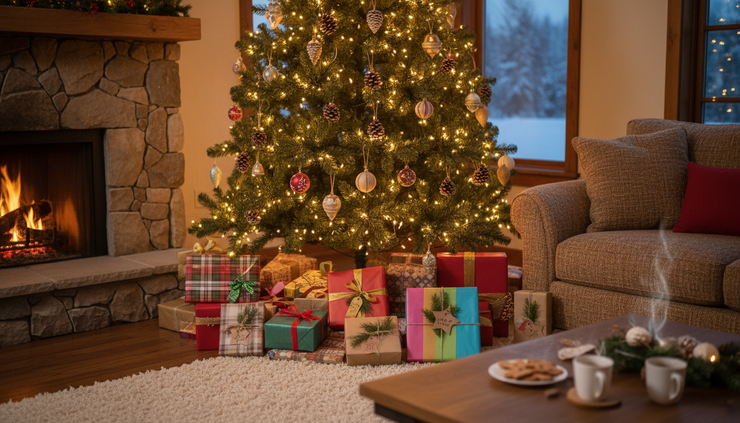
Start earlier than you think, especially if you want to use reusable or handmade materials. A simple plan keeps the process enjoyable.
In October or early November 2026, gather materials you already own. Look for scarves, cloth napkins, saved ribbon, plain boxes, baskets, paper bags, twine, and leftover craft paper.
By late November, choose a wrapping palette. This keeps your gifts from looking random, even if the techniques differ. For example:
Cranberry, cream, pine green, and kraft
Red, gold, ivory, and black
Blue, silver, white, and natural wood
Teal, marigold, pink, and red
In early December, wrap nonperishable gifts first. Save food gifts, greenery, and fragile toppers for the final week.
Create a small wrapping station with scissors, tape, tags, pens, ribbon, twine, and a few decorative items. Keep fabric wraps folded nearby. If you are reusing boxes, add a small note inside saying the box or cloth can be used again.
Small touches that make any wrapping feel more thoughtful
No matter which tradition inspires you, the finishing details matter most. A plain package can feel special when it includes a personal note or a small clue about the gift inside.
Try one of these:
Write the tag by hand instead of using a sticker label.
Add a line about why you chose the gift.
Use a photo as the gift tag for close family.
Tie on an ornament that matches the recipient’s hobby.
Wrap books in fabric to protect the corners.
Use a reusable tin for cookies or candy.
Save ribbon from 2025 and reuse it in 2026.
Choose paper tape when you want easier recycling.
If you are wrapping for a large family, assign each person a pattern, color, or tag shape. It can replace name tags for kids and make the tree look coordinated.
Wrap with meaning, not just material
Christmas gift wrapping traditions around the world remind us that presentation can carry warmth, respect, luck, craft, and joy. For 2026, the most memorable packages will not be the most expensive or the most elaborate. They will be the ones that feel chosen.
Use cloth when you want the wrapping to last. Use red and gold when you want celebration. Use kraft paper and greenery when you want calm. Use stars when you want light. Use color when the gift calls for play.
Start with one idea, then make it your own. A thoughtful knot, a reused ribbon, or a handwritten tag can turn a simple gift into something that feels ready for the season.


Comments